Werner Stauffacher
William TellWerner Stauffacher’s role links the intimate world of the household to the formation of a political alliance. The surviving scenes place him at his home in Steinen and show him helping turn shared purpose into a personal commitment, made tangible when three men join hands.
Identity and Setting
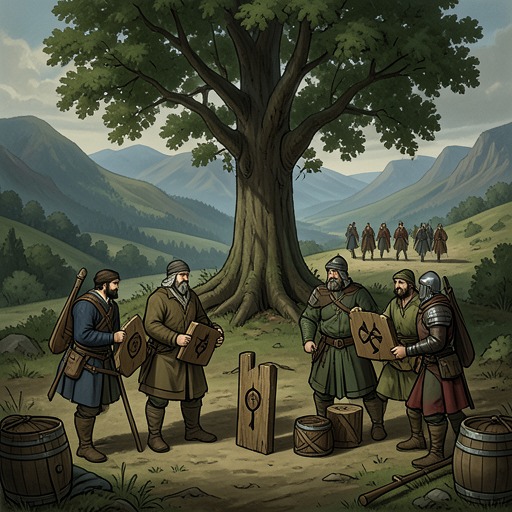
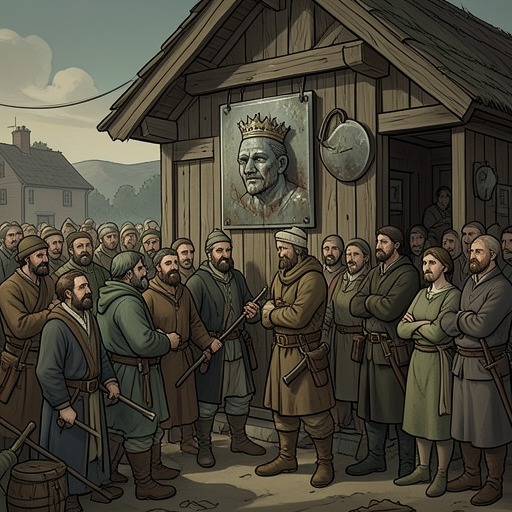
Stauffacher appears in a scene set beneath a lime tree in front of his house, on a public road near a bridge in Steinen, in Schwyz. The location places him in an ordinary, visible setting rather than a secluded political chamber: conversation and the possibility of agreement unfold at the threshold of his home.
Pfeiffer, of Lucerne, enters into conversation with him there. The scene establishes Stauffacher as a participant in an exchange that brings concerns beyond the household into his immediate surroundings, though the available passage does not specify the full substance of their conversation.
Household Bonds and the Wider Conflict
Gertrude is associated with Stauffacher’s domestic life in the exchange. A nearby remark sets the defense of hearth and home against the power of emperors, connecting personal attachment with the larger conflict. The passage thus places the household not outside political danger but among the things that give resistance its stakes.
The same scene points toward Uri and identifies Walter Furst as a worthy comrade. That reference places Stauffacher within a network of personal trust extending beyond Steinen, although the excerpt does not establish the complete circumstances or terms of the proposed journey.
Alliance and Significance
Stauffacher gives his assent to a proposed course and calls for the others to give their right hands. He then includes a younger man, and describes the three men as joining hands together. The gesture makes their agreement visible and reciprocal: resolve is not left as private conviction but is embodied in a bond among companions.
The evidence presents Stauffacher chiefly through these acts of connection—conversation at home, an acknowledged comradeship, and a handclasp shared with two others. His significance in these scenes lies in the movement from domestic setting to collective commitment, with the joining of hands marking that transition.